HTTP 200 OK
Allow: GET, HEAD, OPTIONS
Content-Type: application/json
Vary: Accept
[
{
"id": 9,
"author": {
"name": "Ubaid",
"profile_image": "https://meissasoft-web-images-1.s3.amazonaws.com/Ellipse_87.png",
"role": "Team Lead",
"category": "tools"
},
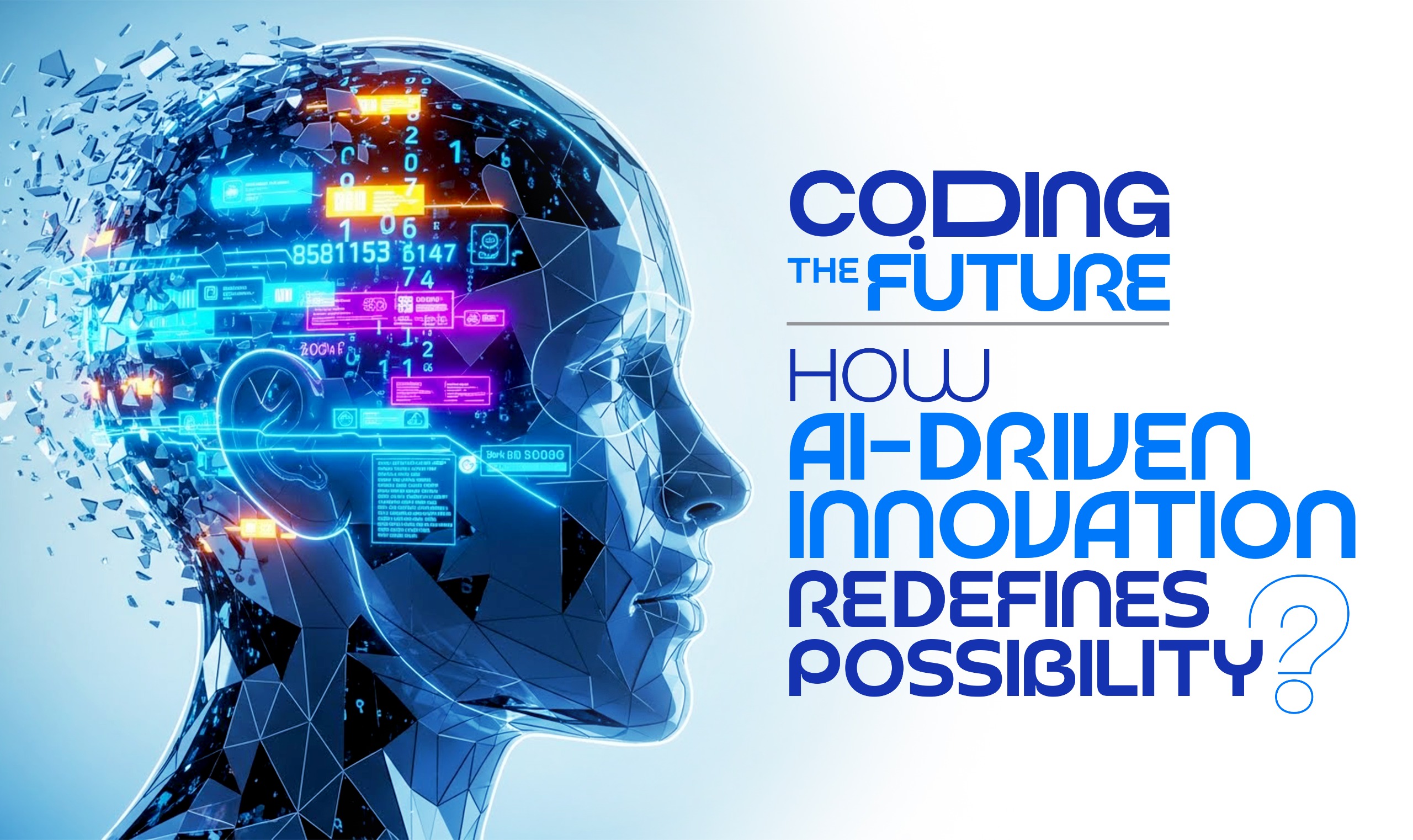
"mainHeading": "Coding the Future: How AI-Driven Innovation Redefines Possibility",
"slug": "coding-the-future-how-ai-driven-innovation-redefines-possibility",
"category": {
"id": 2,
"name": "Artificial Intelligence",
"slug": "artificial-intelligence",
"description": ""
},
"description": "Artificial Intelligence is no longer just a buzzword, it is the engine driving the next industrial revolution. As Pakistan’s Leading AI Powered Software Company, MeissaSoft is at the forefront of this shift, moving beyond basic automation to deliver intelligent, adaptive systems that learn and evolve with your business.",
"blogImg": "https://meissasoft-web-images-1.s3.amazonaws.com/how_ai_driven.jpg",
"hashtags": "AI Solutions, Machine Learning, Predictive Analytics, Automation, MeissaSoft",
"time": "",
"date": "2023-08-30",
"subHeadings": [
{
"id": 67,
"mainHeading": "",
"description": "The era of static software is over. Today, businesses require \"Agentic AI\" systems capable of\r\nautonomous decision-making and predictive analytics. Whether it is optimizing supply chains\r\nthrough machine learning algorithms or enhancing customer service with Natural Language\r\nProcessing (NLP), our solutions are designed to turn raw data into actionable foresight. We don't\r\njust write code; we engineer intelligence that scales.",
"img": null,
"children": []
},
{
"id": 68,
"mainHeading": "",
"description": "At MeissaSoft, Coding the Future means integrating AI into the very DNA of your operations.\r\nFrom generative AI models that accelerate content creation to computer vision systems that\r\nrevolutionize quality control, our custom AI development services empower enterprises to\r\noperate with unprecedented speed and accuracy.",
"img": null,
"children": []
},
{
"id": 69,
"mainHeading": "",
"description": "In a market where speed is currency, relying on legacy systems is a liability. Partner with\r\nMeissaSoft to unlock the full potential of AI-driven innovation. Let us help you build a future\r\nwhere your software doesn’t just work for you, it thinks for you.",
"img": null,
"children": []
}
]
},
{
"id": 11,
"author": {
"name": "Ubaid",
"profile_image": "https://meissasoft-web-images-1.s3.amazonaws.com/Ellipse_87.png",
"role": "Team Lead",
"category": "tools"
},
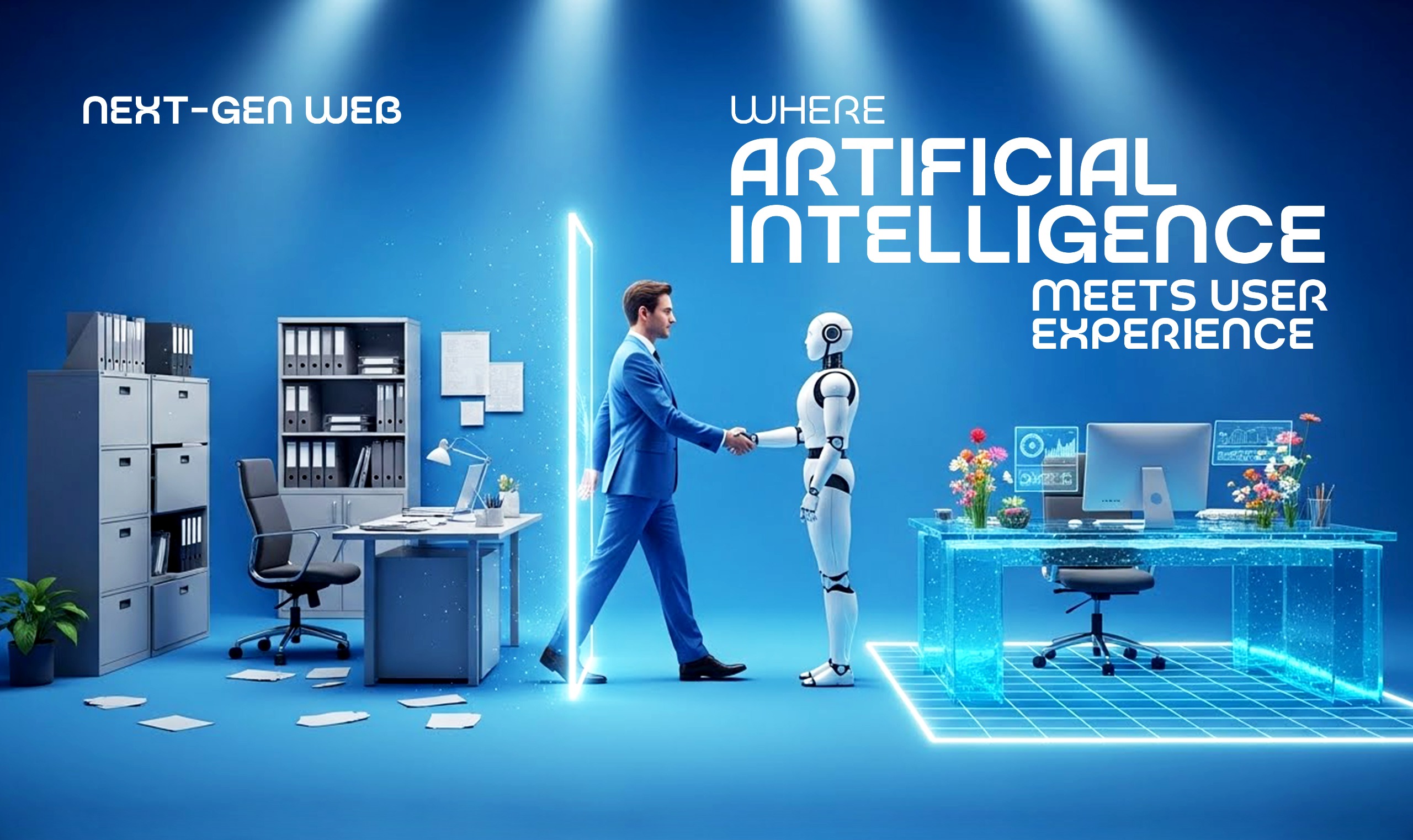
"mainHeading": "Next-Gen Web: Where Artificial Intelligence Meets User Experience",
"slug": "next-gen-web-where-artificial-intelligence-meets-user-experience",
"category": {
"id": 1,
"name": "web development",
"slug": "web-development",
"description": ""
},
"description": "The website of 2025 is not a digital brochure; it is an intelligent, living entity. At MeissaSoft, we are pioneering Next-Gen Web Development by fusing world-class design with the cognitive power of Artificial Intelligence. We believe that a website should adapt to its visitors, not the other way around.",
"blogImg": "https://meissasoft-web-images-1.s3.amazonaws.com/where-ai-meet-user-exp.jpg",
"hashtags": "AI Web Development, Personalized UX, Smart Websites, High-Conversion Design, MeissaSoft, Coding the Future",
"time": "",
"date": "2024-04-08",
"subHeadings": [
{
"id": 61,
"mainHeading": "",
"description": "Traditional web development focuses on aesthetics and responsiveness. We go further. By\r\nintegrating AI-driven personalization engines, our websites analyze user behavior in real-time to\r\nserve dynamic content, recommend relevant products, and adjust interfaces to match individual\r\npreferences. This results in hyper-personalized user experiences (UX) that drive engagement and\r\ndrastically increase conversion rates.",
"img": null,
"children": []
},
{
"id": 62,
"mainHeading": "",
"description": "As Pakistan’s Leading AI Powered Software Company, we ensure your digital presence is\r\nfuture-proof. Our smart web solutions include automated chatbots for instant support, predictive\r\nsearch functionality, and AI-optimized backend performance for lightning-fast load times. We\r\nare Coding the Future of the web, where design meets data science.",
"img": null,
"children": []
},
{
"id": 63,
"mainHeading": "",
"description": "Your website is often the first interaction a client has with your brand. Make it intelligent. Make\r\nit responsive. Make it MeissaSoft. Let us build you a digital platform that engages, converts, and\r\noutperforms the competition.",
"img": null,
"children": []
}
]
},
{
"id": 10,
"author": {
"name": "Ubaid",
"profile_image": "https://meissasoft-web-images-1.s3.amazonaws.com/Ellipse_87.png",
"role": "Team Lead",
"category": "tools"
},
"mainHeading": "Beyond Crypto: Building Trust with Enterprise Blockchain Solutions",
"slug": "beyond-crypto-building-trust-with-enterprise-blockchain-solutions",
"category": {
"id": 3,
"name": "Blockchain",
"slug": "blockchain",
"description": ""
},
"description": "For many, blockchain begins and ends with cryptocurrency. However, at MeissaSoft, we see the bigger picture: a decentralized revolution that fundamentally changes how businesses establish trust and security. As industries across Pakistan and the globe face rising cybersecurity threats, Enterprise Blockchain Solutions offer an immutable shield for your most critical data.",
"blogImg": "https://meissasoft-web-images-1.s3.amazonaws.com/building-trust-with-blockchain.jpg",
"hashtags": "Enterprise Blockchain, Decentralized Applications, Smart Contracts, Data Security, Transparent Ledgers, MeissaSoft",
"time": "",
"date": "2024-04-11",
"subHeadings": [
{
"id": 65,
"mainHeading": "",
"description": "Our approach combines robust architecture with scalable design, ensuring your infrastructure can handle the demands of tomorrow’s digital economy. By leveraging technologies like\r\nHyperledger and Ethereum, MeissaSoft provides a secure foundation for digital transformation.",
"img": null,
"children": []
},
{
"id": 66,
"mainHeading": "",
"description": "Don't let security vulnerabilities slow your growth. Embrace the transparency and efficiency of distributed ledger technology. With MeissaSoft, you are choosing a partner dedicated to building a secure, decentralized future for your enterprise.",
"img": null,
"children": []
},
{
"id": 64,
"mainHeading": "",
"description": "We specialize in moving blockchain beyond crypto. Our focus is on developing high-\r\nperformance Decentralized Applications (dApps) and secure Smart Contracts that automate\r\ncomplex workflows without intermediaries. Imagine a supply chain where every transaction is\r\ntransparent and tamper-proof, or a healthcare system where patient data is shared securely\r\nbetween providers without compromising privacy. This is the reality we build every day.",
"img": null,
"children": []
}
]
},
{
"id": 36,
"author": {
"name": "Ubaid",
"profile_image": "https://meissasoft-web-images-1.s3.amazonaws.com/Ellipse_87.png",
"role": "Team Lead",
"category": "tools"
},
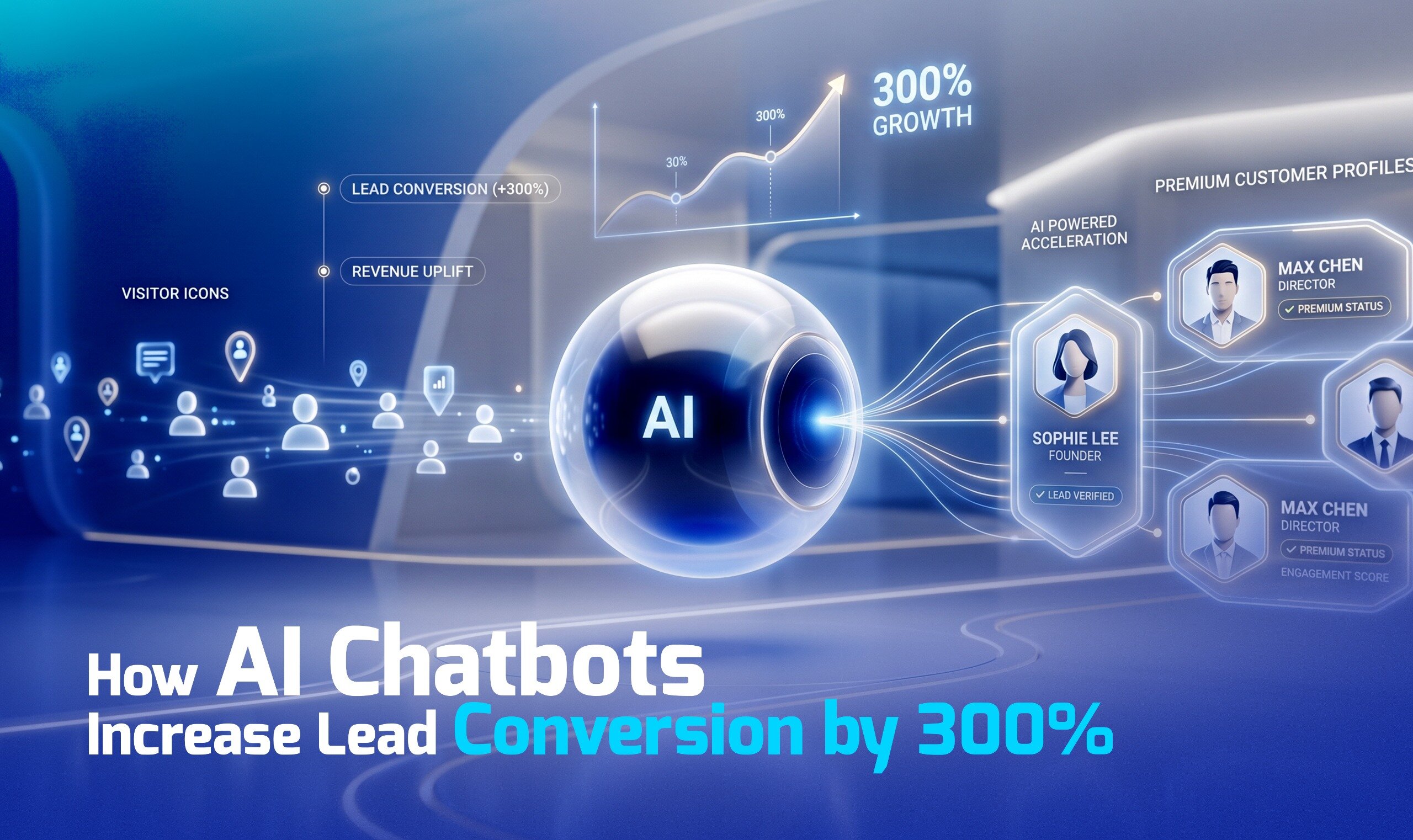
"mainHeading": "How AI Chatbots Increase Lead Conversion by 300%",
"slug": "how-ai-chatbots-increase-lead-conversion-by-300",
"category": {
"id": 2,
"name": "Artificial Intelligence",
"slug": "artificial-intelligence",
"description": ""
},
"description": "Lead conversion has always been a critical challenge for businesses. While generating leads is relatively easy, converting them into customers requires timely engagement and effective communication.\r\nIn 2026, AI chatbots are playing a key role in dramatically increasing conversion rates, with some businesses reporting up to 300% improvement.",
"blogImg": "https://meissasoft-web-images-1.s3.amazonaws.com/chatbots-increase-lead.jpg",
"hashtags": "AILeadGeneration, ChatbotConversion, SalesAutomation, ConversationalAI, MarketingAutomation, LeadOptimization, Meissasoft",
"time": "",
"date": "2026-04-03",
"subHeadings": [
{
"id": 169,
"mainHeading": "The Role of Speed in Conversion",
"description": "Speed is one of the most important factors in lead conversion.\r\nTraditional methods often involve delayed responses, which result in lost opportunities. AI chatbots eliminate this delay by responding instantly.\r\nResearch shows that reducing response time significantly increases the chances of converting leads into customers. This immediate engagement is a major driver of higher conversion rates.\r\nMeiChat enables instant engagement with potential customers, helping ensure that fewer leads are lost due to delayed responses.",
"img": null,
"children": []
},
{
"id": 170,
"mainHeading": "Capturing High-Intent Leads",
"description": "AI chatbots identify and engage high-intent users.\r\nThey analyse user behaviour, such as time spent on pages or specific actions, to determine intent. By targeting users at the right moment, chatbots increase the likelihood of conversion.",
"img": null,
"children": []
},
{
"id": 171,
"mainHeading": "Conversational Selling",
"description": "AI chatbots enable conversational selling.\r\nInstead of static content, users interact with a dynamic system that answers questions, provides recommendations, and guides them through the buying process. This approach feels more natural and helps build user trust.\r\nWith MeiChat, businesses can create personalized, conversational experiences that guide users through the buying journey. MeiChat can be seamlessly integrated into any business platform, allowing companies to capture, qualify, and convert leads in real time.",
"img": null,
"children": []
},
{
"id": 172,
"mainHeading": "Continuous Engagement and Follow-Ups",
"description": "Unlike human agents, chatbots never miss follow-ups.\r\nThey can re-engage users, send reminders, and nurture leads over time. This continuous engagement plays a significant role in improving conversion rates.",
"img": null,
"children": []
},
{
"id": 173,
"mainHeading": "Data-Driven Optimization",
"description": "AI chatbots collect valuable data from every interaction.\r\nThis data helps businesses understand customer behaviour, preferences, and pain points. By analysing this information, companies can continuously optimize their strategies and improve conversion rates",
"img": null,
"children": []
},
{
"id": 174,
"mainHeading": "Reduced Drop-Off Rates",
"description": "One of the biggest challenges in lead conversion is drop-offs.\r\nChatbots address this by keeping users engaged and addressing concerns instantly. Studies show that AI chatbots can handle up to 79% of common customer queries, preventing users from leaving due to unanswered questions.",
"img": null,
"children": []
},
{
"id": 175,
"mainHeading": "Improved Customer Experience",
"description": "Better experiences lead to higher conversions.\r\nAI chatbots provide consistent, accurate, and personalized interactions, improving overall customer satisfaction. Businesses implementing AI customer experience strategies have reported up to 12-27% improvement in customer satisfaction.",
"img": null,
"children": []
},
{
"id": 176,
"mainHeading": "Conclusion",
"description": "AI chatbots are not just improving lead conversion; they are redefining it.\r\nBy combining speed, intelligence, and automation, they create a seamless experience that drives higher engagement and better results.\r\nFor businesses looking to stay competitive in 2026, adopting AI chatbots is no longer an option; it is a necessity.\r\nSolutions like MeiChat are redefining how businesses approach lead conversion by combining automation, intelligence, and real-time engagement.",
"img": null,
"children": []
}
]
},
{
"id": 29,
"author": {
"name": "Ubaid",
"profile_image": "https://meissasoft-web-images-1.s3.amazonaws.com/Ellipse_87.png",
"role": "Team Lead",
"category": "tools"
},
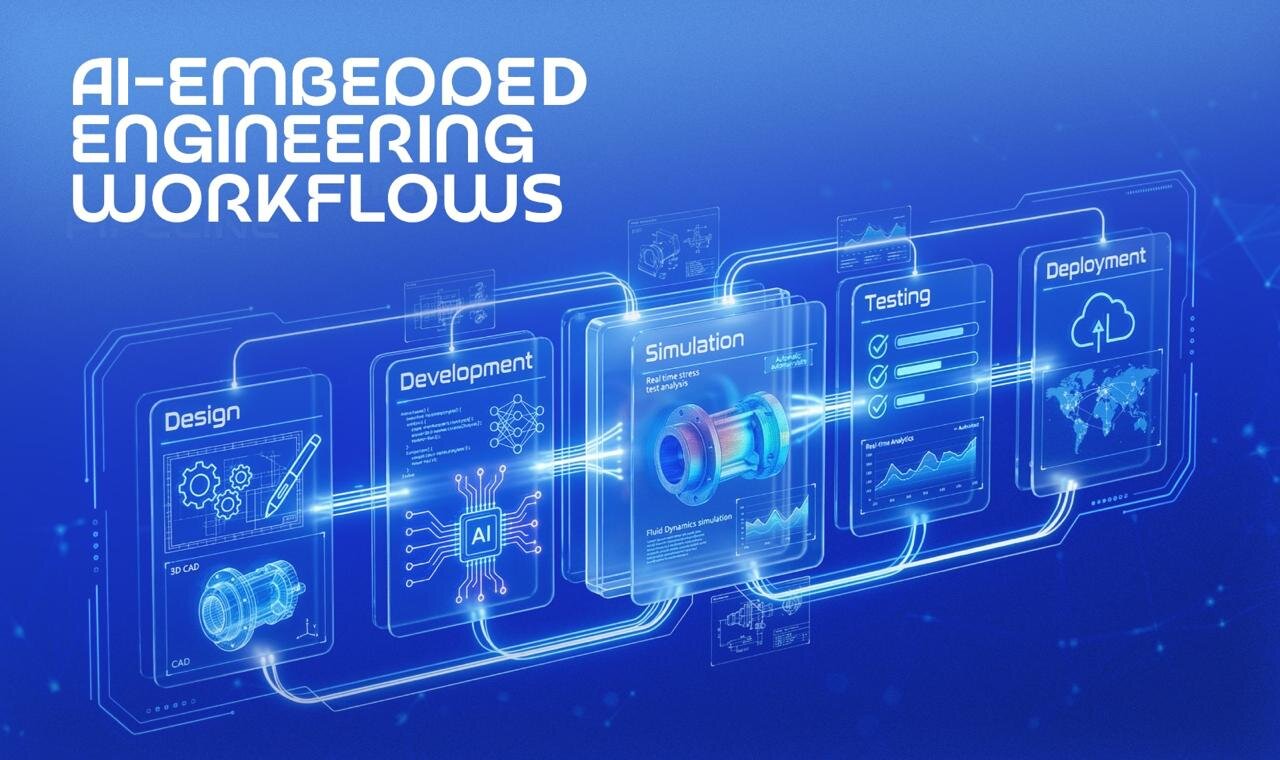
"mainHeading": "Engineering in the Age of AI",
"slug": "engineering-in-the-age-of-ai",
"category": {
"id": 2,
"name": "Artificial Intelligence",
"slug": "artificial-intelligence",
"description": ""
},
"description": "Software development is undergoing a quiet transformation. Artificial intelligence is no longer an external tool but an integrated part of how modern engineering teams build, test, and deploy applications. \r\nAI-embedded engineering workflows are reshaping development by introducing intelligence into every \r\nstage of the process.",
"blogImg": "https://meissasoft-web-images-1.s3.amazonaws.com/AI-embedded-engineering.jpg",
"hashtags": "AIEngineering, AIDrivenDevelopment, IntelligentWorkflows, DevOpsAI, AIForDevelopers, NextGenEngineering,Meissasoft",
"time": "",
"date": "2026-02-11",
"subHeadings": [
{
"id": 125,
"mainHeading": "From Automation to Integration",
"description": "Earlier, AI was used to automate specific tasks such as testing or code suggestions. Today, it is embedded directly into development environments. \r\nThis means AI can now :\r\n• Assist in writing and reviewing code \r\n• Predict potential bugs before deployment \r\n• Optimize performance during runtime \r\n• Improve collaboration across teams \r\nThe result is a more efficient and intelligent\r\ndevelopment cycle.",
"img": null,
"children": []
},
{
"id": 126,
"mainHeading": "Enhancing Developer Productivity",
"description": "One of the biggest advantages of AI-embedded\r\nworkflows is increased productivity. \r\nDevelopers can focus on solving complex problems while AI handles repetitive tasks. This not only speeds up development but also improves the quality of the code being produced. \r\nAI also helps teams maintain consistency by enforcing coding standards and identifying inefficiencies early.",
"img": null,
"children": []
},
{
"id": 127,
"mainHeading": "Improving Software Quality",
"description": "Testing becomes more predictive rather than purely reactive. Systems can identify vulnerabilities, suggest fixes, and even simulate real-world scenarios to ensure stability. \r\nThis reduces the risk of errors and ensures that\r\napplications perform reliably under different conditions.",
"img": null,
"children": []
},
{
"id": 128,
"mainHeading": "Challenges in Adoption",
"description": "Integrating AI into engineering workflows requires a shift in mindset. \r\nTeams need to adapt to new tools and processes. There is also a need to ensure that AI-generated outputs are properly reviewed and validated. \r\nData quality plays a crucial role, as AI systems rely on accurate and relevant data to function effectively.",
"img": null,
"children": []
},
{
"id": 129,
"mainHeading": "Conclusion",
"description": "AI-embedded engineering workflows are not just improving how software is built. They are redefining \r\nthe entire development process. \r\nOrganizations that embrace this shift will be able to build faster, smarter, and more reliable applications \r\nin an increasingly competitive landscape.",
"img": null,
"children": []
}
]
},
{
"id": 30,
"author": {
"name": "Ubaid",
"profile_image": "https://meissasoft-web-images-1.s3.amazonaws.com/Ellipse_87.png",
"role": "Team Lead",
"category": "tools"
},
"mainHeading": "Why Security Must Start Early",
"slug": "why-security-must-start-early",
"category": {
"id": 2,
"name": "Artificial Intelligence",
"slug": "artificial-intelligence",
"description": ""
},
"description": "In today’s digital environment, security cannot be treated as an afterthought. Cyber threats are evolving rapidly, and systems that are not designed with security in mind are at constant risk. \r\nSecurity by Design offers a proactive approach by integrating security into every stage of development.",
"blogImg": "https://meissasoft-web-images-1.s3.amazonaws.com/security-by-design.jpg",
"hashtags": "SecurityByDesign, CyberSecurity, SecureDevelopment, DataProtection, AppSecurity, InfoSec",
"time": "",
"date": "2026-02-19",
"subHeadings": [
{
"id": 130,
"mainHeading": "The Core Principle",
"description": "Security by Design means building systems with protection as a foundational element. \r\nInstead of adding security features later, developers incorporate safeguards from the beginning. This\r\nincludes secure architecture, data protection\r\nmechanisms, and continuous testing.",
"img": null,
"children": []
},
{
"id": 131,
"mainHeading": "Common Vulnerabilities",
"description": "Many security issues arise from basic oversights such as : \r\n• Weak authentication systems \r\n• Unsecured APIs \r\n• Lack of encryption \r\n• Poor access control \r\nAddressing these early can prevent major breaches later.",
"img": null,
"children": []
},
{
"id": 132,
"mainHeading": "Benefits of a Security-First Approach",
"description": "A strong security framework provides:\r\n• Protects sensitive data \r\n• Builds user trust \r\n• Reduces long-term costs \r\n• Ensures compliance with regulations \r\nOrganizations that prioritize security are better positioned to handle modern threats.",
"img": null,
"children": []
},
{
"id": 133,
"mainHeading": "Building a Secure Culture",
"description": "Technology alone is not enough. Teams must adopt\r\nsecure coding practices and remain aware of emerging risks. \r\nRegular audits, training, and monitoring are essential to maintaining a strong security posture.",
"img": null,
"children": []
},
{
"id": 134,
"mainHeading": "Conclusion",
"description": "Security by Design is no longer optional. It is a necessity for any organization that wants to build reliable and trustworthy digital systems.",
"img": null,
"children": []
}
]
},
{
"id": 31,
"author": {
"name": "Ubaid",
"profile_image": "https://meissasoft-web-images-1.s3.amazonaws.com/Ellipse_87.png",
"role": "Team Lead",
"category": "tools"
},
"mainHeading": "The Evolution of Trading Technology",
"slug": "the-evolution-of-trading-technology",
"category": {
"id": 2,
"name": "Artificial Intelligence",
"slug": "artificial-intelligence",
"description": ""
},
"description": "Trading platforms have evolved significantly over the years, but artificial intelligence is now driving the next major transformation. \r\nIn 2026, AI is playing a central role in how trading platforms operate, analyze data, and execute transactions.",
"blogImg": "https://meissasoft-web-images-1.s3.amazonaws.com/AI-trading-platform_1.jpg",
"hashtags": "AITrading, FinTechInnovation, AlgorithmicTrading, SmartTrading, AIInFinance, TradingTechnology",
"time": "",
"date": "2026-02-19",
"subHeadings": [
{
"id": 135,
"mainHeading": "Smarter Decision Making",
"description": "AI enables platforms to process vast amounts of data in real time. \r\nThis allows traders to :\r\n• Identify market trends \r\n• Predict price movements \r\n• Make data-driven decisions \r\nAI-powered insights provide a competitive edge in fast-moving markets.",
"img": null,
"children": []
},
{
"id": 136,
"mainHeading": "Automation and Efficiency",
"description": "Automated trading systems are becoming more advanced. \r\nAI can execute trades based on predefined strategies, reducing the need for manual intervention. This \r\nimproves efficiency and minimizes the risk of human error.",
"img": null,
"children": []
},
{
"id": 138,
"mainHeading": "Risk Management",
"description": "AI also enhances risk management by continuously monitoring market conditions. \r\nIt can detect anomalies, assess potential risks, and adjust strategies accordingly. This helps traders better\r\nprotect their investments and reduce potential losses.",
"img": null,
"children": []
},
{
"id": 139,
"mainHeading": "Personalization",
"description": "Modern trading platforms are becoming more user-centric. \r\nAI enables personalized experiences by analyzing user behavior and preferences. This allows platforms to offer tailored recommendations and insights.",
"img": null,
"children": []
},
{
"id": 140,
"mainHeading": "Conclusion",
"description": "AI is transforming trading platforms into intelligent systems that are faster, smarter, and more efficient. \r\nAs technology continues to evolve, AI will play an even greater role in shaping the future of trading.",
"img": null,
"children": []
}
]
},
{
"id": 33,
"author": {
"name": "Ubaid",
"profile_image": "https://meissasoft-web-images-1.s3.amazonaws.com/Ellipse_87.png",
"role": "Team Lead",
"category": "tools"
},
"mainHeading": "Why Security is Critical in Fintech Applications",
"slug": "why-security-is-critical-in-fintech-applications",
"category": {
"id": 2,
"name": "Artificial Intelligence",
"slug": "artificial-intelligence",
"description": ""
},
"description": "Fintech applications handle sensitive financial data, making security a critical concern. \r\nAny vulnerability can lead to significant financial and reputational damage for both users and organizations.",
"blogImg": "https://meissasoft-web-images-1.s3.amazonaws.com/Security-fintech-application.jpg",
"hashtags": "FintechSecurity, SecureFintech, FinancialCybersecurity, DataProtection, AppSecurity, TrustInTech",
"time": "",
"date": "2026-03-12",
"subHeadings": [
{
"id": 146,
"mainHeading": "The Importance of Security",
"description": "Security in fintech ensures :\r\n• Protection of user data \r\n• Safe financial transactions \r\n• Compliance with regulations \r\nWithout strong security measures, fintech platforms struggle to gain user trust.",
"img": null,
"children": []
},
{
"id": 147,
"mainHeading": "Common Threats",
"description": "Fintech applications face risks such as :\r\n• Data breaches \r\n• Fraudulent transactions \r\n• Phishing attacks \r\n• System vulnerabilities \r\nAddressing these threats requires a proactive approach.",
"img": null,
"children": []
},
{
"id": 148,
"mainHeading": "Best Practices",
"description": "Effective security strategies include :\r\n• Multi-factor authentication \r\n• Data encryption \r\n• Regular security audits \r\n• Secure API integrations \r\nThese measures help protect both users and businesses.",
"img": null,
"children": []
},
{
"id": 149,
"mainHeading": "Conclusion",
"description": "Security is the foundation of any successful fintech application. \r\nOrganizations that prioritize security will not only protect their systems but also build long-term trust \r\nwith their users.",
"img": null,
"children": []
}
]
},
{
"id": 28,
"author": {
"name": "Ubaid",
"profile_image": "https://meissasoft-web-images-1.s3.amazonaws.com/Ellipse_87.png",
"role": "Team Lead",
"category": "tools"
},
"mainHeading": "The Rise of Agentic AI: From Assistance to Action",
"slug": "the-rise-of-agentic-ai-from-assistance-to-action",
"category": {
"id": 2,
"name": "Artificial Intelligence",
"slug": "artificial-intelligence",
"description": ""
},
"description": "Artificial intelligence is no longer limited to assisting users or generating insights. A new class of intelligent systems is emerging that can take initiative, make decisions, and execute tasks independently. This shift is driven by what is now known as Agentic AI.\r\nAgentic AI represents a transition from passive intelligence to active intelligence. Instead of waiting for instructions, these systems can interpret goals, plan actions, and adapt in real time. For businesses, this opens up entirely new possibilities in automation, efficiency, and decision-making.",
"blogImg": "https://meissasoft-web-images-1.s3.amazonaws.com/agentic-AIautonomous-systems.jpg",
"hashtags": "AgenticAI, AutonomousSystems, AIInnovation, DigitalTransformation, FutureOfWork, IntelligentAutomation, AITrends",
"time": "",
"date": "2026-02-11",
"subHeadings": [
{
"id": 120,
"mainHeading": "Understanding Agentic AI",
"description": "Traditional AI systems operate within defined boundaries. They respond to inputs, generate outputs, \r\nand rely heavily on human direction. Agentic AI, on the other hand, functions more like an autonomous agent. \r\nIt can :\r\n• Define objectives based on context \r\n• Break down complex tasks into smaller actions \r\n• Execute workflows across multiple systems \r\n• Continuously learn and adjust its behaviour \r\nThis makes agentic systems more dynamic and capable of handling real-world scenarios where \r\nconditions change rapidly.",
"img": null,
"children": []
},
{
"id": 121,
"mainHeading": "The Evolution of Autonomous Systems",
"description": "Autonomous systems have been around in industries like robotics and logistics, but recent advancements in machine learning and computing power have accelerated their capabilities. \r\nModern systems can now integrate multiple functions such as natural language processing, data \r\nanalysis, and decision-making into a single framework. This allows businesses to deploy intelligent agents that can manage operations with minimal human intervention. \r\nFrom managing IT infrastructure to optimizing supply chains, autonomous systems are becoming a core part of digital transformation strategies.",
"img": null,
"children": []
},
{
"id": 122,
"mainHeading": "Business Applications",
"description": "Agentic AI is already being applied across industries. \r\nIn enterprise environments, it can automate internal workflows, reduce manual effort, and increase efficiency. In customer service, intelligent agents can resolve complex queries without escalation. In \r\nsoftware development, autonomous systems can monitor performance, detect issues, and even suggest or implement fixes. \r\nThese use cases highlight the potential of agentic AI to not only improve processes but also create new \r\nways of operating.",
"img": null,
"children": []
},
{
"id": 123,
"mainHeading": "Challenges and Considerations",
"description": "While the potential is significant, adopting agentic AI requires careful planning. \r\nOrganizations must ensure that systems operate within defined boundaries and maintain transparency in decision-making. Data privacy, security, and governance frameworks must also be strengthened to support autonomous operations. \r\nThe goal is not to remove human oversight but to create systems that enhance human capability.",
"img": null,
"children": []
},
{
"id": 124,
"mainHeading": "Conclusion",
"description": "Agentic AI is redefining what intelligent systems can achieve. As businesses move toward more autonomous operations, those who invest in this technology early will gain a competitive advantage. \r\nThe future is not just about intelligent insights. It is about intelligent action.",
"img": null,
"children": []
}
]
},
{
"id": 32,
"author": {
"name": "Ubaid",
"profile_image": "https://meissasoft-web-images-1.s3.amazonaws.com/Ellipse_87.png",
"role": "Team Lead",
"category": "tools"
},
"mainHeading": "How to Build a Scalable Trading App",
"slug": "how-to-build-a-scalable-trading-app",
"category": {
"id": 2,
"name": "Artificial Intelligence",
"slug": "artificial-intelligence",
"description": ""
},
"description": "Building a trading application requires more than just functionality. It demands scalability, security, and performance. \r\nA well-designed trading app must handle high volumes of data, process transactions quickly, and provide a seamless user experience.",
"blogImg": "https://meissasoft-web-images-1.s3.amazonaws.com/scalable-trading-app_1.jpg",
"hashtags": "TradingAppDevelopment, ScalableSystems, FinTechDevelopment, HighPerformanceApps, CloudArchitecture, SecureApplications, Meissasoft",
"time": "",
"date": "2026-03-11",
"subHeadings": [
{
"id": 141,
"mainHeading": "Key Components",
"description": "A scalable trading app includes :\r\n• Real-time data processing \r\n• Secure user authentication \r\n• Fast order execution \r\n• Robust backend infrastructure \r\nEach component must be designed to support growth.",
"img": null,
"children": []
},
{
"id": 152,
"mainHeading": "Security Considerations",
"description": "Security is a top priority. \r\nImplementing encryption, secure APIs, and compliance measures ensures that user data and transactions remain protected",
"img": null,
"children": []
},
{
"id": 153,
"mainHeading": "Conclusion",
"description": "Building a scalable trading app requires careful planning and the right technology stack. \r\nBusinesses that invest in strong architecture and performance will be able to deliver reliable and \r\nefficient trading platforms.",
"img": null,
"children": []
},
{
"id": 150,
"mainHeading": "Architecture Matters",
"description": "Choosing the right architecture is critical for scalability.\r\nCloud-based infrastructure, microservices, and load balancing help ensure that the application can scale as demand increases.",
"img": null,
"children": []
},
{
"id": 151,
"mainHeading": "Performance Optimization",
"description": "Speed is essential in trading applications. \r\nOptimizing performance involves reducing latency, improving data processing, and ensuring that the system can handle peak loads.",
"img": null,
"children": []
}
]
},
{
"id": 34,
"author": {
"name": "Ubaid",
"profile_image": "https://meissasoft-web-images-1.s3.amazonaws.com/Ellipse_87.png",
"role": "Team Lead",
"category": "tools"
},
"mainHeading": "How AI is Replacing Traditional Customer Support in 2026",
"slug": "how-ai-is-replacing-traditional-customer-support-in-2026",
"category": {
"id": 2,
"name": "Artificial Intelligence",
"slug": "artificial-intelligence",
"description": ""
},
"description": "Customer support has undergone a massive transformation in recent years, but in 2026, the shift is no longer gradual; it is structural. Businesses are moving away from traditional, human-only support systems toward AI-powered support ecosystems that are faster, more scalable, and available 24/7.\r\n\r\nThis transition is not just about reducing cost. It is about meeting modern customer expectations.",
"blogImg": "https://meissasoft-web-images-1.s3.amazonaws.com/AI-replacing-traditional-customers.jpg",
"hashtags": "AICustomerSupport, CustomerExperienceAI, IntelligentSupport, ChatbotAutomation, FutureOfCustomerService, AIInBusiness",
"time": "",
"date": "2026-04-02",
"subHeadings": [
{
"id": 160,
"mainHeading": "Conclusion",
"description": "AI is not just replacing traditional customer support; it is redefining it.\r\nWith faster responses, higher efficiency, and scalable operations, AI has become a core component of modern customer experience strategies.\r\nBusinesses that fail to adapt risk falling behind in a landscape where speed and convenience define success.",
"img": null,
"children": []
},
{
"id": 154,
"mainHeading": "The Shift from Reactive to Instant Support",
"description": "Traditional customer support has always been reactive. Customers submit tickets, wait in queues, or remain on hold for extended periods. This model struggles to meet the expectations of today’s users, who demand instant responses.\r\nAI has completely transformed this dynamic.\r\nAI-powered systems now respond within seconds, compared to minutes or hours with human agents. Studies show that AI chatbots can reduce response times by up to 90–95%, significantly improving the overall customer experience. \r\nThis dramatic improvement in speed is one of the primary reasons businesses are moving away from traditional support models",
"img": null,
"children": []
},
{
"id": 155,
"mainHeading": "Automation of Routine Queries",
"description": "One of the most impactful changes is the automation of repetitive tasks.\r\nIn 2026, AI systems are capable of resolving 60-80% of customer inquiries without human intervention. Routine queries such as password resets, order tracking, and FAQs are now handled entirely by AI. This allows human agents to focus only on more complex or sensitive issues, improving both efficiency and service quality.\r\nSolutions like MeiChat are enabling businesses to automate a significant portion of customer interactions, from handling FAQs to resolving common support issues instantly. By integrating AI-driven chat systems, companies can reduce workload on human agents while maintaining high service quality.",
"img": null,
"children": []
},
{
"id": 156,
"mainHeading": "Cost Efficiency and Scalability",
"description": "Traditional support systems are expensive to scale. Hiring, training, and managing large support teams require significant investment.\r\nAI, on the other hand, offers a scalable solution.\r\nBusinesses are reporting strong returns, with AI-driven customer support delivering up to 3.5x to 8x ROI in some cases. Additionally, AI systems can handle thousands of conversations simultaneously, something that human teams cannot match.\r\nThis makes AI not just a replacement, but an upgrade in operational capability.",
"img": null,
"children": []
},
{
"id": 157,
"mainHeading": "24/7 Availability and Customer Expectations",
"description": "Modern customers expect support at any time, not just during business hours.\r\nAI enables 24/7 availability without increasing operational costs. According to the industry reports that around 60%+ of customers are comfortable interacting with AI chatbots rather than waiting for a human agent. \r\nThis shift in preference is a clear indicator that AI is becoming the default support channel.",
"img": null,
"children": []
},
{
"id": 158,
"mainHeading": "The Rise of Hybrid Support Models",
"description": "Despite the rapid adoption of AI, human support is not disappearing entirely.\r\nThe most successful companies are implementing hybrid models where AI handles initial interactions and human agents step in for complex cases.\r\nThis approach combines the speed and efficiency of AI with the empathy and judgment of humans, creating a more balanced and effective customer experience.\r\nPlatforms like MeiChat support hybrid customer service models, where AI initial interactions and seamlessly transfers complex queries to human agents when needed.",
"img": null,
"children": []
},
{
"id": 159,
"mainHeading": "Challenges and Considerations",
"description": "AI adoption is not without challenges.\r\nPoorly implemented AI-powered systems can lead to frustration, particularly when they fail to understand user intent or do not provide an option to connect with a human agent. Trust and accuracy remain critical factors.\r\nBusinesses must focus on proper training, integration, and continuous optimization of intelligent support systems.",
"img": null,
"children": []
}
]
},
{
"id": 35,
"author": {
"name": "Ubaid",
"profile_image": "https://meissasoft-web-images-1.s3.amazonaws.com/Ellipse_87.png",
"role": "Team Lead",
"category": "tools"
},
"mainHeading": "How Chatbots Are Converting Website Visitors into Customers",
"slug": "how-chatbots-are-converting-website-visitors-into-customers",
"category": {
"id": 2,
"name": "Artificial Intelligence",
"slug": "artificial-intelligence",
"description": ""
},
"description": "Website traffic alone does not guarantee growth. The real challenge lies in converting visitors into paying customers.\r\nIn 2026, AI chatbots have emerged as one of the most effective tools for improving conversion rates by engaging users in real time and guiding them through the buying journey.",
"blogImg": "https://meissasoft-web-images-1.s3.amazonaws.com/chatbots-converting-web.jpg",
"hashtags": "ChatbotMarketing, ConversionOptimization, AIForBusiness, LeadGeneration, CustomerEngagement, DigitalGrowth, Meissasoft",
"time": "",
"date": "2026-04-02",
"subHeadings": [
{
"id": 161,
"mainHeading": "The Problem with Traditional Websites",
"description": "Most websites still rely on static elements such as forms, landing pages, and FAQs.\r\nThese approaches often fail to address user intent in real time. When visitors do not find immediate answers, they leave.\r\nThis is where chatbots makes a significant impact.",
"img": null,
"children": []
},
{
"id": 162,
"mainHeading": "Real-Time Engagement",
"description": "AI chatbots engage visitors instantly.\r\nInstead of waiting for users to explore multiple pages, chatbots initiate conversations, answer questions, and provide guidance in real time.\r\nStudies consistently shows that customers expect immediate responses, and delays often result in lost opportunities. \r\nBy reducing response time, chatbots prevent drop-offs and keep users engaged.\r\nTools like MeiChat allow businesses to engage website visitors instantly through intelligent conversations, helping users make decisions without friction.",
"img": null,
"children": []
},
{
"id": 163,
"mainHeading": "Personalized Conversations",
"description": "Modern chatbots are no longer limited to scripted responses.\r\nThey use AI to analyze user behavior, preferences, and intent, allowing them to deliver personalized interactions.\r\nThis level of personalization helps build trust and increases the likelihood of conversion.",
"img": null,
"children": []
},
{
"id": 164,
"mainHeading": "Lead Qualification and Filtering",
"description": "Chatbots play a crucial role in lead qualification.\r\nInstead of collecting generic form submissions, chatbots interact with users, ask relevant questions, and filter high-intent leads.\r\nThis ensures that sales teams focus only on qualified prospects, improving efficiency and conversion rates.\r\nMeiChat enhances lead qualification by asking contextual questions, identifying high-intent users, and passing only qualified leads to sales teams for faster conversion.",
"img": null,
"children": []
},
{
"id": 165,
"mainHeading": "24/7 Sales Assistance",
"description": "One of the biggest advantages of chatbots is their ability to function as round-the-clock sales assistants.\r\nThey provide information, recommend products, and assist users even outside business hours.\r\nAccording to the industry report, 64% of users value the 24/7 availability of chatbots, which directly influences their purchasing decisions. \r\nThis continuous availability ensures that no opportunity is missed.",
"img": null,
"children": []
},
{
"id": 166,
"mainHeading": "Reducing Friction in the Buying Journey",
"description": "Chatbots simplify the decision-making process.\r\nBy answering questions instantly and guiding users step by step, they eliminate confusion and reduce hesitation.\r\nThis leads to faster decision-making and higher conversion rates.",
"img": null,
"children": []
},
{
"id": 167,
"mainHeading": "Integration with Business Systems",
"description": "Modern chatbots integrate with CRM systems, payment gateways, and databases.\r\nThis allows them to perform actions such as booking appointments, processing orders, and updating customer information in real time.\r\nSuch integrations make chatbots more than just communication tools; they become operational assets.",
"img": null,
"children": []
},
{
"id": 168,
"mainHeading": "Conclusion",
"description": "Chatbots are transforming websites from passive platforms into interactive, conversion-driven systems.\r\nBy combining speed, personalization, and automation, they help businesses capture and convert leads more effectively.\r\nIn a competitive digital landscape, chatbots are no longer optional; they are essential.\r\nPlatforms like MeiChat are enabling businesses transform their websites into intelligent, conversion-driven systems that actively engage and convert visitors.",
"img": null,
"children": []
}
]
},
{
"id": 37,
"author": {
"name": "Ubaid",
"profile_image": "https://meissasoft-web-images-1.s3.amazonaws.com/Ellipse_87.png",
"role": "Team Lead",
"category": "tools"
},
"mainHeading": "How Agentic AI is Changing the Future of Software Development",
"slug": "how-agentic-ai-is-changing-the-future-of-software-development",
"category": {
"id": 2,
"name": "Artificial Intelligence",
"slug": "artificial-intelligence",
"description": ""
},
"description": "There's a shift happening in software development that goes far beyond autocomplete and code suggestions. Agentic AI, AI systems that don't just respond but act, plan, and execute multi-step tasks on their own is quietly rewriting the rules of how software gets built. And if you're in the tech world, whether you're a developer, a product manager, or a business owner, this is one trend you cannot afford to ignore in 2026.",
"blogImg": "https://meissasoft-web-images-1.s3.amazonaws.com/WhatsApp_Image_2026-05-16_at_13.34.17.jpeg",
"hashtags": "Agentic AI,Artificial Intelligence,Tech Innovation,Digital Transformation,Automation,AI Development",
"time": "",
"date": "2026-05-05",
"subHeadings": [
{
"id": 177,
"mainHeading": "What Is Agentic AI, Really?",
"description": "Most people are familiar with AI assistants that answer questions, generate text, or suggest lines of code. Agentic AI is fundamentally different. These are AI systems designed to pursue goals over extended, multi-step processes. They make decisions, use tools, call APIs, browse the web, write and execute code, and self-correct when something goes wrong all with minimal human input.\r\n\r\nThink of the difference between asking someone to \"write a function to parse JSON\" versus handing them an entire feature ticket and watching them research the codebase, write the logic, run tests, catch errors, and push a working solution. That second scenario? That's what agentic AI development looks like today.\r\n\r\nTools like AutoGPT, Devin, and emerging frameworks built on large language models are enabling AI agents to take on increasingly complex software tasks autonomously. This isn't science fiction anymore; it's shipping in production environments.",
"img": null,
"children": []
},
{
"id": 178,
"mainHeading": "How Agentic AI Is Already Changing Software Development",
"description": "",
"img": null,
"children": []
},
{
"id": 179,
"mainHeading": "1. Autonomous Code Generation and Debugging",
"description": "Modern agentic AI systems don't just write code; they debug it, refactor it, and optimize it in iterative loops. A developer can describe a feature in plain English, and the agent handles the boilerplate, the edge cases, and even the unit tests. This dramatically reduces the cognitive load on engineering teams and accelerates the development lifecycle.\r\n\r\nFor software companies, this means faster time to market without compromising on code quality. The AI can maintain task context across workflows more effectively than traditional automation systems. It follows the brief.",
"img": null,
"children": []
},
{
"id": 180,
"mainHeading": "2. Smarter Project Planning and Architecture Suggestions",
"description": "Agentic AI tools are now capable of reading project requirements and suggesting architectural decisions whether a system should use microservices or a monolithic approach, where to introduce caching, or how to structure a database schema for performance at scale. This kind of decision support used to require a senior architect with years of experience. Now, AI can augment that expertise and give junior developers access to senior-level guidance in real-time.",
"img": null,
"children": []
},
{
"id": 181,
"mainHeading": "3. AI Driven Testing and QA Automation",
"description": "Quality assurance has traditionally been time consuming and expensive. Agentic AI is transforming QA by autonomously generating test cases, simulating user behavior, identifying edge cases that human testers might miss, and running regression testing at a scale and speed that was previously impossible.\r\n\r\nThis is particularly valuable for continuous integration and continuous deployment (CI/CD) pipelines, where speed and reliability must coexist. Agentic testing tools integrate directly into DevOps workflows, flagging vulnerabilities and performance bottlenecks before code ever reaches production.",
"img": null,
"children": []
},
{
"id": 182,
"mainHeading": "4. Real-time Code Review and Security Scanning",
"description": "Security has always been a challenge in fast paced development environments. With agentic AI, security scanning becomes a continuous background process. These agents monitor codebases for vulnerabilities, suggest patches, and flag compliance issues aligned with OWASP standards and zero trust principles in real-time, not in post-deployment audits.",
"img": null,
"children": []
},
{
"id": 183,
"mainHeading": "The Impact on Development Teams",
"description": "Here's the conversation that makes a lot of developers uncomfortable: will agentic AI replace software developers?\r\n\r\nThe honest answer is more nuanced. Agentic AI will not replace skilled developers but developers who know how to work with agentic AI will replace those who don't. The role of a developer is evolving from writing every line of code to orchestrating AI systems, reviewing outputs, making architectural decisions, and focusing on the high level creative and strategic work that machines still can't do well.\r\n\r\nWhat this does mean is that smaller teams can now build more. A two-person startup can ship what previously required a team of ten. A mid-sized software house can handle a larger volume of projects with the same headcount. This is not job destruction it's productivity amplification",
"img": null,
"children": []
},
{
"id": 184,
"mainHeading": "What Businesses Need to Build AI Ready Software",
"description": "Adopting agentic AI in your development workflow isn't just about picking the right tool. It requires a thoughtful approach to infrastructure, data governance, and team capability.\r\n\r\nModular architecture is essential. Agentic AI systems work best with clean, well-documented codebases where modules are decoupled and APIs are clearly defined. Messy legacy systems are where AI agents stumble.\r\n\r\nStrong DevOps foundations CI/CD pipelines, containerization, automated testing give AI agents the scaffolding they need to operate efficiently and safely.\r\n\r\nHuman oversight loops remain critical. The most successful implementations of agentic AI in development environments are those where humans review AI decisions at key checkpoints. Trust, but verify especially in security sensitive applications.",
"img": null,
"children": []
},
{
"id": 185,
"mainHeading": "MeissaSoft's Approach to AI-Powered Development",
"description": "At MeissaSoft, the integration of AI into the software development lifecycle isn't a buzzword strategy it's a deliberate engineering practice. From AI-powered code reviews to intelligent testing pipelines, MeissaSoft's development teams are built to leverage these tools while maintaining the human judgment and craftsmanship that clients trust.\r\n\r\nAs a leading AI software development company, MeissaSoft helps global businesses build intelligent, scalable applications that harness the power of agentic AI without the complexity and risk of going it alone.",
"img": null,
"children": []
},
{
"id": 186,
"mainHeading": "The Road Ahead",
"description": "Agentic AI in software development is still maturing. The tooling is evolving rapidly, the best practices are being written in real-time, and the boundaries of what these systems can handle autonomously are expanding with every model update. But one thing is clear: the future of software development is a collaboration between human intelligence and machine capability.\r\n\r\nThe companies that understand this and build their engineering culture around it will move faster, build smarter, and outpace the competition in ways that were simply not possible before.\r\n\r\nThe question isn't whether agentic AI will change software development. It already has. The question is whether your team is ready to build with it.\r\n\r\nMeissaSoft is a global AI-powered software development company helping businesses across industries build future ready digital products. From agentic AI solutions to full-stack development, our teams deliver technology that scales.",
"img": null,
"children": []
}
]
},
{
"id": 38,
"author": {
"name": "Ubaid",
"profile_image": "https://meissasoft-web-images-1.s3.amazonaws.com/Ellipse_87.png",
"role": "Team Lead",
"category": "tools"
},
"mainHeading": "Serverless Architecture vs. Microservices: What Should You Choose in 2026?",
"slug": "serverless-architecture-vs-microservices-what-should-you-choose-in-2026",
"category": {
"id": 5,
"name": "Cloud Computing",
"slug": "cloud-computing",
"description": ""
},
"description": "If you've been in a technical planning meeting lately, there's a good chance someone has said the words \"serverless\" or \"microservices\" possibly both, possibly in the same breath, possibly followed by a long, uncomfortable silence. These two architectural approaches have dominated cloud-native development conversations for years, and in 2026, the debate is more relevant than ever.\r\n\r\nBut here's the thing: this isn't really an either-or question. Choosing between serverless architecture and microservices isn't like choosing between iOS and Android. Both have their place. The right choice depends on what you're building, how fast you need to scale, what your team's capabilities look like, and what kind of operational complexity you're willing to manage.\r\n\r\nLet's break it down properly.",
"blogImg": "https://meissasoft-web-images-1.s3.amazonaws.com/WhatsApp_Image_2026-05-16_at_13.34.18_2.jpeg",
"hashtags": "Cloud Computing,Serverless Architecture,AWS Lambda,Microservices Architecture,Digital Transformation,Google Cloud",
"time": "",
"date": "2026-05-12",
"subHeadings": [
{
"id": 192,
"mainHeading": "What Is Serverless Architecture?",
"description": "Serverless doesn't mean \"no servers.\" It means you don't manage the servers. In a serverless model, you write individual functions that are triggered by events an HTTP request, a file upload, a scheduled job and the cloud provider handles provisioning, scaling, and infrastructure management automatically.\r\n\r\nAWS Lambda, Google Cloud Functions, and Azure Functions are the dominant players here. You pay for what you use (down to milliseconds of execution time), and you never worry about whether your server can handle a traffic spike at 2 AM on a Saturday.",
"img": null,
"children": []
},
{
"id": 193,
"mainHeading": "Serverless Architecture: Where It Shines",
"description": "Serverless is genuinely excellent in the right context. Here's where it wins:\r\n\r\nEvent driven workloads If your application processes events rather than runs continuously (image uploads, form submissions, web-hook handling, scheduled tasks), serverless is a natural fit. Functions spin up, do their job, and spin down. No idle compute costs.\r\n\r\nRapid prototyping and MVPs Startups and product teams love serverless for getting ideas to market quickly. There's no infrastructure to configure, no servers to babysit, and deployment is as simple as pushing code.\r\n\r\nVariable and unpredictable traffic When you genuinely don't know how much load your system will face, serverless auto scaling takes care of it automatically. You won't over provision or under provision.\r\n\r\nSmaller teams Serverless reduces the operational burden significantly. A small dev team can build and maintain a sophisticated backend without needing dedicated DevOps engineers managing server fleets.\r\n\r\nCost efficiency at lower scale for applications with inconsistent traffic, the pay-per-execution model is often dramatically cheaper than running dedicated servers around the clock.",
"img": null,
"children": []
},
{
"id": 194,
"mainHeading": "Microservices Architecture: Where It Wins",
"description": "Microservices earn their complexity at a certain stage of scale and sophistication. Here's where the investment pays off:\r\n\r\nLarge, complex applications When your product has dozens of distinct business domains, microservices allow teams to own and evolve their services independently. Spotify has separate services for search, playback, playlists, recommendations each owned by a dedicated team.\r\n\r\nIndependent scalability If your checkout service gets 100x more traffic than your settings page, microservices let you scale that one service without scaling everything. This is precise, efficient, and cost effective at high volume.\r\n\r\nTechnology flexibility Different services can be written in different languages and use different databases. Your recommendation engine can run Python with a graph database while your payment service runs Java with PostgreSQL. This polyglot approach is a real advantage in complex systems.\r\n\r\nLong term maintainability with clear service boundaries, replacing or rewriting one service doesn't destabilize the entire system. This makes microservices architectures more adaptable over time.",
"img": null,
"children": []
},
{
"id": 195,
"mainHeading": "The Tradeoffs You Need to Understand",
"description": "Neither approach is free of cost. Both come with real tradeoffs that many articles conveniently gloss over.\r\n\r\nServerless cold starts remain a genuine issue for latency sensitive applications. When a function hasn't been called in a while, there's a delay as the cloud provider spins it up. For user facing APIs where response time matters, this can create a frustrating experience.\r\n\r\nDebugging serverless applications is notoriously harder. Distributed traces, log aggregation across multiple function invocations, and reproducing issues locally all require proper tooling investment.\r\n\r\nMicroservices operational complexity is real and often underestimated. You're now managing service discovery, inter-service communication, distributed tracing, network latency, and independent deployment pipelines. Organizations that move to microservices without the right DevOps maturity often end up with a distributed monolith all the complexity, none of the benefits.\r\n\r\nVendor lock-in is a concern with serverless. AWS Lambda functions don't migrate easily to Google Cloud Functions. If cloud portability matters for your business, this is worth factoring in.",
"img": null,
"children": []
},
{
"id": 196,
"mainHeading": "Serverless vs Microservices in 2026: What's Changed?",
"description": "The landscape has shifted. In 2026, the lines between these two paradigms are blurring in interesting ways.\r\n\r\nContainer based serverless Services like AWS Fargate and Google Cloud Run let you run containerized applications in a serverless model, giving you more control over your runtime environment without managing servers. This is closing the gap between the two approaches.\r\n\r\nServerless native microservices More teams are building microservices architectures where each service is implemented as a Serverless function rather than a long running container. You get the modularity of microservices with the operational simplicity of Serverless.\r\n\r\nPlatform maturity The tooling around both paradigms has matured significantly. Observability tools, service meshes, and CI/CD pipelines purpose-built for these architectures have reduced the operational overhead considerably.",
"img": null,
"children": []
},
{
"id": 197,
"mainHeading": "How to Actually Choose",
"description": "Here's a practical decision framework:\r\n\r\nThe honest advice? Most teams should start with Serverless and evolve toward microservices as complexity and scale demand it. The architectural debt of starting with microservices before you understand your system's boundaries is a painful lesson many engineering teams have learned the hard way.",
"img": null,
"children": []
},
{
"id": 198,
"mainHeading": "MeissaSoft's Cloud Architecture Expertise",
"description": "At MeissaSoft, we don't sell you an architecture we help you find the right one for your business context. Our cloud and DevOps engineers have built production systems across both Serverless and microservices patterns, and we know the difference between a textbook recommendation and what actually works in practice.\r\n\r\nWhether you're building a new product from scratch, modernizing a legacy system, or scaling an existing platform, MeissaSoft's cloud engineering teams bring the expertise to make the right architectural call and the experience to execute it well.",
"img": null,
"children": []
},
{
"id": 199,
"mainHeading": "The Bottom Line",
"description": "Serverless and microservices aren't rivals they're tools. Knowing when to reach for each one is the mark of a mature engineering team. In 2026, the best architectures are often hybrid, combining the operational simplicity of Serverless where it makes sense with the structural discipline of microservices where complexity demands it.\r\n\r\nBuild for today. Design for tomorrow. And pick the architecture that serves your users not the one that sounds most impressive in a pitch deck.\r\n\r\nMeissaSoft is a global software development and cloud engineering company. We help businesses design, build, and scale cloud-native applications using modern architectural patterns including Serverless, microservices, and everything in between.",
"img": null,
"children": []
},
{
"id": 190,
"mainHeading": "Understanding the Fundamentals",
"description": "",
"img": null,
"children": []
},
{
"id": 191,
"mainHeading": "What Is Microservices Architecture?",
"description": "Microservices is an architectural style where a large application is split into small, independent services each responsible for a specific business function. A user authentication service, an order processing service, a notification service all running independently, communicating via APIs or message queues, and deployable without touching each other.\r\n\r\nThe idea is that instead of one giant monolithic application that breaks entirely when one thing goes wrong, you have a collection of focused services that can fail, scale, or be updated in isolation. Netflix, Amazon, and Uber famously built their platforms on microservices, and for good reason at scale, the benefits are enormous.",
"img": null,
"children": []
}
]
}
]